Guides
Food truck startup: what to do, and in what order
Food truck startup as a dependency problem: the support kitchen comes first, then fire and health reviews, then a written demand test at one corner.
What to take away
- Starting a truck is a dependency problem before it is a money problem. Several decisions physically block others, and doing them out of order is what turns a build into a rebuild.
- The support kitchen question sits upstream of almost everything. It fixes your daily route, your operating radius, and often whether a permit can be issued at all.
- Menu decides equipment, equipment decides the fire inspection, the fire inspection decides the build, and the build decides the money.
- Demand for a truck is local to a street corner and an hour of the day. National interest in a cuisine tells you nothing about whether a queue forms at your window on a Tuesday.
- Treat the first season as an experiment with written expectations. Guessing what a pitch will do is unavoidable; failing to write the guess down is not.
Why one national answer cannot exist
Two operators with identical trucks and menus can face very different startups. One works in a city with a mobile vending ordinance, a health department that requires a commissary association, and a fire authority that inspects annually.
The other works in a county that treats the same vehicle as a temporary food establishment and only sees it at events. The equipment may match. The sequence, cost and timeline do not.
Los Angeles County routes a mobile food facility through its Department of Public Health and ties the permit to a commissary. Chicago issues a mobile food vehicle license through its Department of Business Affairs and Consumer Protection. Same truck, two agencies, two documents, two review calendars.
So this guide is about the shape of the work and the order it has to run in. Every specific figure and every requirement belongs to an office named below, and the useful skill is knowing which office to ask.
The dependency chain
Here is what blocks what.
| Decision | What it unblocks | What happens if you do it out of order |
|---|---|---|
| Support kitchen secured | Health permit application, daily logistics, operating radius | A finished truck with nowhere to legally prep, fill or dump |
| Menu and process fixed | Equipment list, hazard profile, staffing level | Equipment bought for dishes you later drop |
| Fire authority consulted on the equipment list | Suppression, ventilation, fuel layout | Retrofitting a hood or suppression into a finished build |
| Health inspection passed | Trading at all | A booking calendar with no permit behind it |
| Location permission obtained per pitch | Revenue | A truck that is legal but has nowhere to stand |
Read that top to bottom before you spend anything. Each row is cheap to do early and expensive to undo late.
Start with the support kitchen
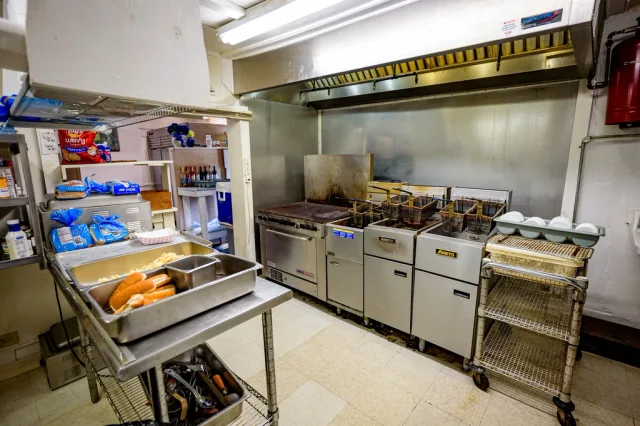
Many health authorities tie a mobile food permit to an association with a fixed, permitted facility for preparation, storage, water and waste. Where that applies, it is the first real constraint on the business, and it is not primarily a compliance constraint. It is a logistics one.
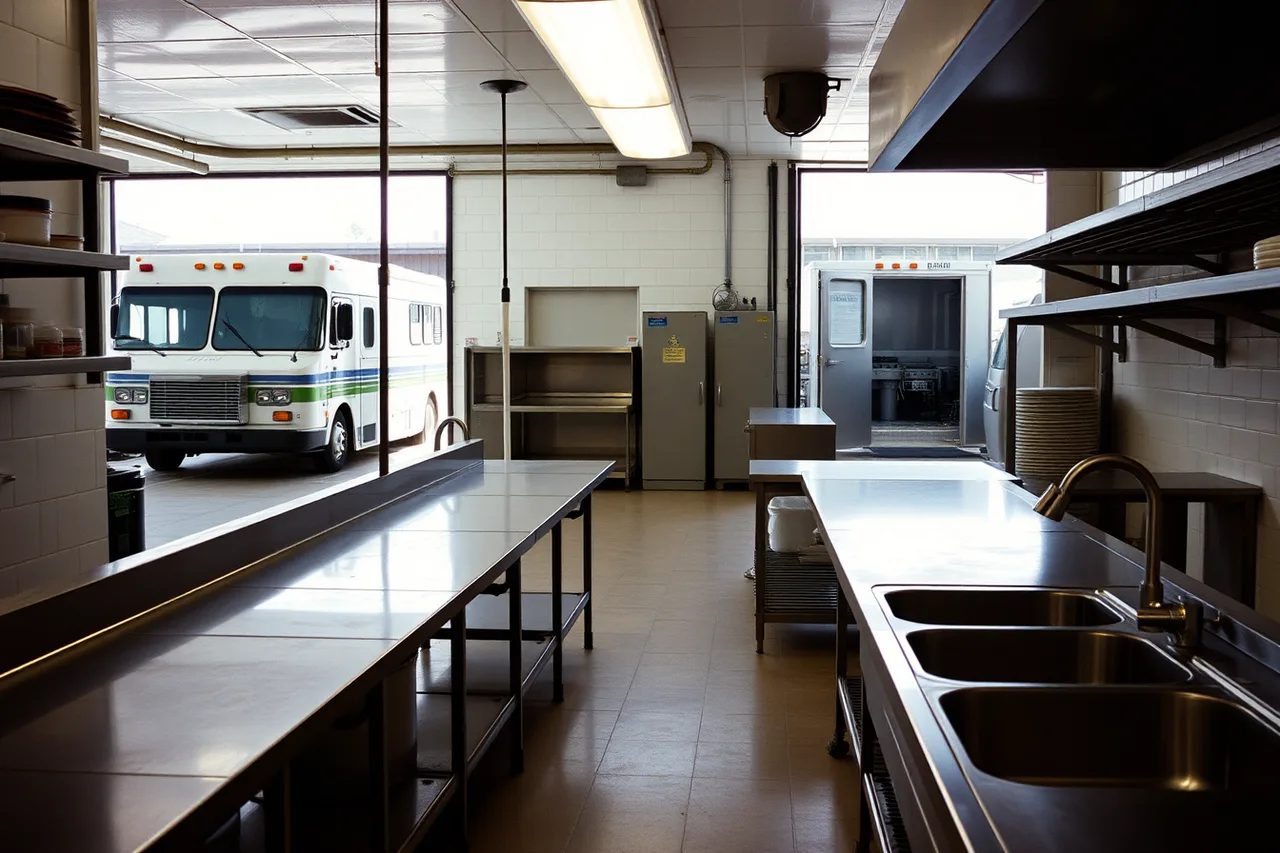
The facility fixes where your day starts and ends. The round trip to it is unpaid time. It also caps how far you can range: a pitch ninety minutes away costs three hours before you sell anything.
It can determine whether an event in a neighboring jurisdiction is workable, since a second health authority may want its own arrangement.
So ask early, and ask precisely: does an association requirement apply here, what document proves it, must the facility sit inside this jurisdiction, and what changes when I trade elsewhere. Those four answers reshape the business plan more than any equipment choice will.
Finding out what actually applies
Identify the agency before you go hunting for the rule. The FDA publishes a state-by-state directory of the agencies that administer retail food regulation, which gets you from a state to the office whose code governs your operation. From there the local health department fills in the specifics.
For the business itself, the Small Business Administration's guide to planning, launching and running a business covers formation, registration and the general permit and insurance sequence. It is orientation, not instruction: it will not know what your county requires.
For taxes, the IRS sets out what a new business has to settle at the outset. That includes structure, identification numbers and recordkeeping from the first day, not the first return.
Read all three as scaffolding. The answers that bind you come from your own health department, fire authority, vending office and state revenue agency.
Testing demand where it actually lives
Food truck demand is not a market, it is a set of specific corners at specific hours. A business district window at lunch, a brewery with no kitchen at seven in the evening, a Saturday market, a private event booking: these are four different businesses that happen to share a vehicle.
The only test worth running is the narrow one.
Demand test at one corner
- Pick one pattern, place, time
- Count passersby and stoppers
- Write expected orders per hour
- Trade a defined run of days
- Compare result, keep or drop
The test runs in five steps.
- Choose one pitch and one service window. A weekday lunch outside an office block, or a Thursday evening at a brewery with no kitchen. Not both.
- Count the foot traffic at that pitch, same two hours, on three different days. Write the counts down before you cook.
- Set a sales target in advance. An example-only figure40 covers at an average ticket of 12 dollars, so about 480 dollars in the window.
- Trade the window with a short menu and record covers, average ticket, the hour the queue peaks and the hour it dies.
- Compare the numbers with the written target. Repeat once at the same pitch before you change anything.
That is a small experiment, and the discipline is entirely in step three. An operator who writes the expectation down learns something either way. One who does not will explain any outcome as a success.
What the job actually is
Be honest about the work before committing capital. The Bureau of Labor Statistics describes what running a food service operation involves day to day: staffing, supplies, preparation and sanitation.

Managers also handle customer problems, budgets and payroll records, on schedules that include nights, weekends and holidays.
On a truck, one person holds all those roles, plus driving, filling water tanks and standing at a window in any weather.
That matters for planning because it sets a ceiling on how many services a week the founding team can sustain. Building a revenue plan that assumes a six day trading week and then discovering the fifth day is when maintenance, sourcing and paperwork actually happen is a common way to run out of both cash and people.
Sequencing the first ninety days
Work backwards from the first date you intend to take money, and put the long lead items first: the support kitchen conversation, the fire authority conversation about your equipment list, and the health department's review time. Those three are calendar items you cannot compress. Everything else, including branding, the website and the second menu idea, can move.
First ninety days
- Day 0Start support kitchen conversation
- Day 0Consult fire authority on equipment
- Day 0Submit health department review
- MonthlyRe-check all lead times
- QuarterlyRe-confirm every written assumption
Treat the ninety days as milestones, not as a countdown.
- Weeks 1 and 2support kitchen conversations and health department questions. Confirm whether a commissary association applies and what document proves it.
- Weeks 3 and 4send the equipment list to the fire authority and book its review. Sign the kitchen agreement.
- Weeks 5 to 8build or fit-out, with fire and health requirements fixed before any panel goes in.
- Weeks 9 and 10health inspection, then the permits and pitch permissions for your first location.
- Weeks 11 and 12one soft opening at one pitch, traded against the written demand target.
- Week 13review the assumption list and re-check the lead times.
Example-only figures for scale: a used step van with a basic fit-out often lands between US$40,000 and US$90,000, and a new custom build between US$100,000 and US$200,000. Health permit review is commonly two to six weeks. Treat all of it as a placeholder and replace it with numbers from your own offices.
Two habits protect the plan. Re-check the lead times monthly, because offices get busier seasonally. And keep a written list of every assumption you are running on, with the date you last confirmed it. An assumption more than a quarter old about a permit, a pitch or a supplier has usually stopped being true.
Common questions
Should I buy a truck before or after talking to the health department?
After, unless you enjoy expensive surprises. The health and fire conversations tell you what the vehicle has to contain, and a truck bought to somebody else's specification frequently needs work to meet yours. Looking at trucks early is fine. Buying one is a decision that should follow the two interviews.
Is a trailer easier than a truck?
Different, not easier. A trailer separates the vehicle from the kitchen, which can simplify maintenance and sometimes registration, but it adds a tow vehicle, a maneuvering problem at tight pitches and a different set of questions for the vending office. Ask each authority how it treats a towed unit before assuming the answer.
How much of the first year should I plan to work myself?
The realistic assumption is stricter than it feels: the founding team covers every role until the operation can pay for one hire.
Hiring happens when a specific task fails, not on a schedule, so plan the trading week around what one or two people can sustain for months. Do not plan around what is possible in a good week.
What is the single most common startup mistake?
Committing capital to a decision that a later conversation reverses. Almost every expensive story in this trade reduces to that.