Guides
How to start a food truck business: six calls before you buy
How to start a food truck business as six ordered conversations, with what a discouraging answer at each stage means and what never to buy before it.
What to take away
- This is how to start a food truck business as a sequence of six first conversations, in order: the support kitchen, the menu process, the fire authority, the vending office, business and tax setup, and a pitch test, with what a discouraging answer at each stage actually means for the plan.
- Every stage is a call or a visit, not a purchase. The point of running them in order is that a later answer can invalidate an earlier spend.
- A "no" is information, not a wall. Most of them redirect the plan rather than end it, and knowing which is which saves months.
- Do not sign, order or build until the stage that authorizes it has answered. That single rule prevents most of the expensive failures in this trade.
- Keep a dated log of who said what. You will be repeating these answers to a lender, a landlord and an inspector for the next two years.
Stage one: the support kitchen call
If you are not sure which body to call, start from the FDA's directory of the state agencies that administer retail food regulation, which names the office rather than guessing the rule. Then call the health department and ask whether a mobile food permit here requires association with a permitted fixed facility, and if so what proof they accept.
Support Kitchen Permit Decision
Does a mobile food permit require a fixed facility?
Find a permitted kitchen with legal water and waste
You have more freedom on radius but still need a kitchen
The permit you are working toward is usually called a mobile food facility or mobile food unit permit, issued by the county or city health department, and the proof of a fixed facility is usually a signed commissary agreement or commissary letter.
Los Angeles County is a concrete example of what this call returns. There, the Department of Public Health permits and inspects all mobile food facilities and enforces the California Health and Safety Code, except in Long Beach, Pasadena and Vernon, which have their own environmental health departments. The county defines a mobile food facility as a vehicle used in conjunction with a commissary or other permanent food facility, so the commissary question is answered before you ask it.
If the answer is yes, this becomes your first search. Find a kitchen with permits already in place, willing to sign whatever the department wants, hours that fit your prep window, and a legal point for water and waste discharge.
If the answer is no, you have more freedom on radius. You still need somewhere to do all of those things, so the search changes shape rather than disappearing.
A discouraging answer here sounds like: there are three such facilities in the county and all are full. That does not end the plan. It changes the geography of it, and it should change your view of any pitch that sits far from the ones that exist.
Stage two: the menu and process conversation
Describe your intended menu to the health department in process terms, not in dish names. Say what arrives raw, what gets cooked on board, what gets held hot or cold, and what is assembled to order.
Menu Process vs Equipment Category
Reheat commissary component
- Risk category
- Lower
- Equipment
- Holding and retherm
- Requirements
- Fewer
Raw protein cooked to order
- Risk category
- Higher
- Equipment
- Cooking and ventilation
- Requirements
- Additional
The reason to do this before buying anything is that the process determines the category, and the category determines the equipment. A menu built around reheating a component prepared at the commissary sits in a different world from one built around raw protein cooked to order at the window.
A discouraging answer here sounds like: that process puts you in a higher risk category with additional requirements. The right response is usually not to abandon the dish but to ask what a simpler process would look like and price both.
Stage three: the fire authority conversation
Take your equipment list, not your truck, to the fire authority, usually the local fire marshal's office. Ask which appliances trigger suppression and ventilation requirements, how fuel storage is assessed, what extinguisher provision they expect, and how often they reinspect. Hood and suppression questions are generally answered against NFPA 96, the standard for ventilation control and fire protection of commercial cooking, and propane installations against NFPA 58, the Liquefied Petroleum Gas Code, as adopted in your local fire code.
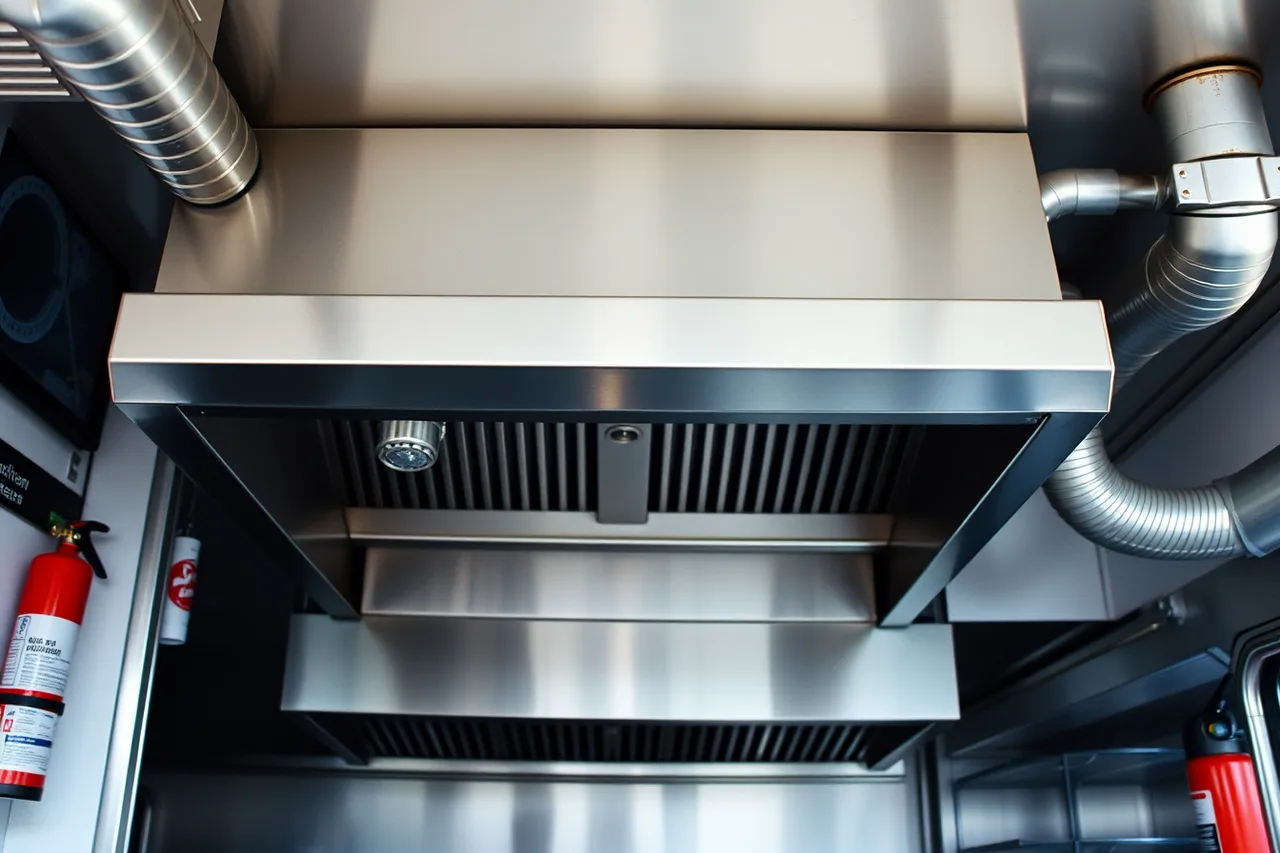
This is the stage most people skip, and it is the most expensive one to skip. Suppression and ventilation are structural. Retrofitting them into a finished build costs a multiple of specifying them at the start.
A discouraging answer here sounds like: with that appliance you will need a system you had not budgeted for. That is a real cost, and it is a cost you now know about before the build rather than at inspection.
Stage four: the vending and location conversation
Ask the municipal office, typically the city's business licensing or street vending office, which locations are permissible, what the permit is called (often a mobile vending, street vending or peddler permit), whether it is tied to a specific spot, what distance rules apply and what hours are allowed. Ask separately about generator noise, because that limit rules out pitches that are otherwise legal.
Vending and Location Questions
- Which locations are permissible?
- What is the permit called?
- Is it tied to a specific spot?
- What distance rules apply?
- What hours are allowed?
- What generator noise limits apply?
The thing to listen for is the difference between public right of way and private property. They are usually governed by different offices with different answers, and an operator who only asks one of them ends up with half a picture.
A discouraging answer here sounds like: the corner you wanted is not available to vendors. That is worth knowing before you build a plan around foot traffic you cannot legally serve. Ask what is available instead, and go and count people there.
Stage five: the business and tax setup
With the operating picture settled, register the business itself. The Small Business Administration's guide to planning and launching a business lays out the general sequence of formation, registration, permits and insurance. The IRS covers what a new business settles at the outset: entity structure, identification numbers, which taxes apply and recordkeeping from day one rather than from the first filing.
Business and Tax Setup
- Register the business
- Choose entity structure
- Obtain identification numbers
- Determine which taxes apply
- Set up recordkeeping from day one
- Arrange permits and insurance
Neither source knows your county. They are good for making sure you have not missed a whole category. The failure mode here is that people remember the food permits and forget that they have become an employer, or a sales tax collector, or both. In practice that means an Employer Identification Number from the IRS, a sales tax permit or seller's registration with the state revenue department, a city or county business licence, and, once anyone is on payroll, Form I-9 and Form W-4 for each hire plus state unemployment insurance registration.
Stage six: the pitch test
Only now is it worth committing to a location. Pick one pitch, one time band and one narrow menu, and trade it for a defined run of days with your expectation written down beforehand.
Pitch Test Metric
Queue clear time
Not revenue on the best day
A stalled line is money walking away
Fix is in the menu, not the pitch
The metric that matters most is not revenue on the best day. It is how long the queue takes to clear and whether people leave it. Service speed is the whole model on a truck: a stalled line is money walking away, and it is the one problem that cannot be fixed by marketing.
A discouraging answer here sounds like: people came and then left. That is usually a production problem rather than a demand problem, and the fix is in the menu rather than the pitch.
What goes wrong if you invert the order
The stage that can reverse it
- Buy the truck
- Health department process review
- Build the kitchen
- Fire authority equipment review
- Sign a pitch agreement
- Vending office rules
- Print the full menu
- Your own pitch test
- Hire staff
- Permit issue date
The waste
- Buy the truck
- Equipment for a category you are not in
- Build the kitchen
- Suppression and ventilation retrofit
- Sign a pitch agreement
- A location you cannot legally trade at
- Print the full menu
- A board the line cannot produce fast enough
- Hire staff
- Payroll before revenue
Where the plan goes next
Once the six stages are answered, the rest of the setup follows from them. The permit answers become the register you keep with the truck. The process answers set what the equipment must do and therefore what the line can actually produce at speed.
The pitch answers determine how far the operation can range from its base. Credential requirements set the floor for what a new hire completes before a first shift, and the pitch test result is the first honest input to how you tell people where the truck will be.
Common questions
Can I run these stages in parallel to save time?
Partly. Stages one, two and three genuinely depend on each other and should run in order. Stage five can run alongside any of them. Stage four can start early as research and finish late as an application. What cannot be parallelized is spending: no purchase should precede the stage that authorizes it.
How long does the whole sequence take?
Nobody can say from a page, because review times vary by office and by season. Ask each body for its current turnaround during your first call, add them with the dependencies in mind, and re-check monthly. Treat the total as a planning figure that moves rather than a date you can promise anyone.
What if I already bought a truck?
Then run the same stages, in the same order. Treat the vehicle as a constraint, not a decision. Ask the health department what your existing build supports, not what you hoped to sell. Ask the fire authority what the current equipment requires.
Some plans survive this intact. The rest are better rewritten now than after an inspection.
Do I need all of this for events only?
You need most of it, plus a layer. Event trading commonly adds a temporary permit from the host jurisdiction on top of whatever you already hold, and the organizer is not the authority. Ask which body issued the event's permission, then ask that body what it wants from a single vendor.