Guides
Food truck street permits: what you can and cannot sell from a public spot
How street permit conditions restrict what food trucks may sell, and how those limits, fire codes and fixed costs shape menu pricing on a public spot.
What to take away
- A street permit authorizes sales categories, not just a location. Selling outside them is a permit violation.
- Fire and propane codes limit frying and open flame, removing high-margin items from many curbside spots.
- Commissary, waste and restroom obligations are fixed costs that a $12 average ticket has to carry.
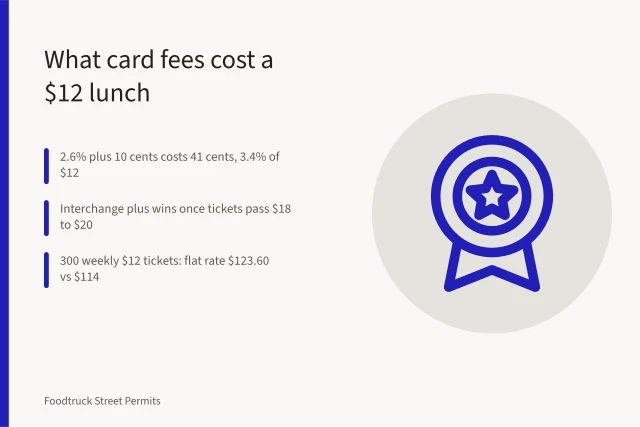
- Card processing on small tickets decides whether a permitted street stop earns money.
The permit defines your menu, not your kitchen
A street permit lists what you may sell: prepackaged goods, food cooked on board, or both. A truck approved for prepackaged sales cannot grill a burger just because the kitchen can.
Inspectors read the authorization, not the equipment. Selling outside the approved category is treated as operating without a valid permit and can trigger a stop-work order.
A permit class is not the same thing as a health inspection grade. The health department checks how you handle food, while the street authorization controls what you may offer at that spot.
The city publishes denial, revocation and appeal steps on its food truck permit rules page. Read those conditions before you build a menu around one corner.
Conditions that shape what you can sell
Curbside vending regulations bundle sales limits with operating limits. Hours, zone, noise and waste rules all attach to the same authorization.
What it allows
- Prepackaged only
- Wrapped snacks, bottled drinks
- Hot food on board
- Menu cooked inside the truck
- Set service hours
- Sales inside a fixed window
- Assigned zone
- Vending at the named block
What it blocks
- Prepackaged only
- Anything cooked or assembled on board
- Hot food on board
- Raw prep without a commissary
- Set service hours
- A late-night second shift
- Assigned zone
- Moving to a busier corner
Each row is a menu decision. A short service window caps daily covers, so the ticket price has to carry the whole day.
A street food truck licence in some cities is issued separately from the health permit. Vending in the public right of way is a temporary use, which is why conditions attach to the authorization rather than to the vehicle.
Most agencies also require the authorization, the business license and the operator name to be visible from the service window.
Fire, propane and ventilation limits
NFPA 96 sets ventilation and fire protection requirements for commercial cooking, and inspectors apply it to trucks with fryers, griddles and hood systems. That ventilation and fire protection standard drives hood, duct and extinguisher requirements on board.
Where a spot restricts propane, electric cooking becomes the only route. Electric griddles recover heat slowly, which slows service and cuts tickets per hour.
Canadian vendors face federal food safety expectations layered on top of municipal street permits. Health Canada's food safety guidance covers storage, handling and holding temperatures.
Costs that follow the permit, not the food
A street permit often requires a commissary for potable water, greywater disposal and restroom access. Commissary rent is fixed whether you sell ten lunches or a hundred.
Waste and grease rules add disposal contracts. Noise and generator limits can push vendors to battery or inverter systems that cost more up front.
Insurance limits usually track the permit, and a second vehicle often needs a second authorization rather than an endorsement.
A condition that limits service hours or cooking method changes the menu before it changes the paperwork.
Example: a $12 lunch on a permit-limited spot
Take a truck with a four-hour service window, a $12 average ticket, and a permit for prepackaged drinks only.
- List only items the authorization allows, and drop anything needing frying or raw assembly.
- Set the ticket near $12 so the line moves quickly.
- Add permit fees, commissary rent, waste removal and insurance into a daily fixed cost.
- Divide that fixed cost by the covers a four-hour window can realistically produce.
- Compare the result against card fees on each $12 sale.
Step five is where thin margins break. Before signing a processor contract, compare food truck card reader fees on a $12 ticket, since interchange plus pricing and monthly minimums change the answer.