Guides
Food Truck Customer Acquisition: A Practical Guide
Food truck customer acquisition: use Google, social pages and booking directories, keep schedules current, document permits, and measure service capacity.
What to take away
- Food truck customer acquisition starts with three separate audiences and they need completely different things. Treating them as one is why most effort here produces nothing.
- The person walking past needs to recognize what you sell from thirty feet. The person planning needs your schedule to be reliable. The person booking needs proof and a capacity figure.
- Work out which audience is actually short before spending anything. Most operations are strong with one and invisible to the other two.
- The fastest gains usually sit with the planners, because those customers already want you and are being defeated by logistics.
- Nothing here works if the queue stalls, because a stalled queue converts interest into people leaving.
Audience one: the person already walking past
They are not looking for you. They are going somewhere and have perhaps four seconds of attention as they approach.
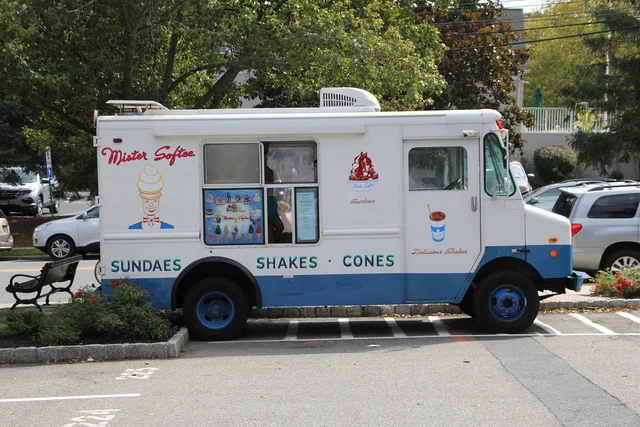
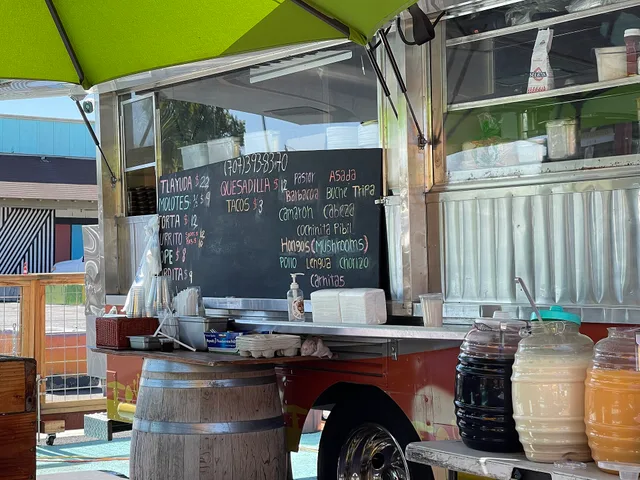
What that audience needs, in order: category recognition at distance, an obvious place to queue, a readable board from where they will be standing, and a wait they can estimate. Nothing about your story, your sourcing or your history helps at this stage, because none of it is legible in four seconds.
The way to work on this audience is to stand thirty feet from your own truck at the hour you trade, in the light and weather you actually trade in, and ask what a stranger can tell before reading anything.
Two changes usually move this audience more than anything else. Making the category obvious without reading, and making the queue's start and end visible so people can judge the wait.
Canva can help lay out a high-contrast menu board, while Square POS can keep the order-entry menu aligned with what staff sell. Mark the queue entrance and end with cones or stanchions, then repeat the thirty-foot test; software does not replace a readable board or a visible line.
Audience two: the person planning to find you
This is the audience most trucks under-serve, and it is the one with the highest return, because these people have already decided they want to come and are being stopped by not knowing where you will be.
Use Facebook and Instagram for dated location posts, Google Business Profile for accurate business details, and check whether Roaming Hunger or Street Food Finder reaches customers or event buyers in your service area. Also submit to local event calendars and vendor directories; confirm geography, listing rules, and any booking or listing fees before paying.
Google Business Profile and organic Facebook and Instagram pages can be created without a listing fee. Paid promotion, printing, loyalty cards, and directory or booking charges vary, so check current terms and get quotes before committing.
What they need is a schedule that is correct, easy to find, and dated. Three failures recur.
The schedule lives in three places and they disagree. The schedule has no last-updated date, so a reader cannot tell whether it is current. And there is no stated rule for weather, so a doubtful morning becomes a guess that usually resolves as staying home.
Keep a single master schedule in Google Calendar, then update the same dated location, hours, and weather or cancellation rule across Google Business Profile and social pages. Set a recurring reminder before publishing each week's schedule; treat changes as updates everywhere, not just on one profile.
Fixing all three is a week's work and costs nothing recurring. The wider discipline of treating the schedule as the primary publication is in how a moving business publishes itself.
Search and map profiles matter mainly for this audience, not discovery. Their job is to answer where and when for somebody who already knows your name.
Google Business Profile is one place planners may look for current business information. Google's “Guidelines for representing your business on Google” explain how to represent a business accurately; check the guidance for a mobile business rather than treating a temporary pitch as a permanent storefront.
Audience three: the person booking you
Private, corporate and event buyers do not arrive through the same route and do not want the same things. They want evidence.
Current permits for the jurisdiction the event sits in. A certificate of insurance, often naming them. A capacity figure they can plan around. And a quote that says what happens if the count changes or the weather closes the day.
Build a booking packet with the applicable street-vending or mobile-food-vending permit, the local health department's food permit, your certificate of insurance, and an additional insured endorsement if the buyer requires it. Include a Form W-9 if requested for vendor onboarding, along with the menu, measured service rate, and quote.
The mistake to avoid is overstating throughput. The whole event is judged on whether the queue moved, so the number you give should come from a measured rate at a comparable service. Staffing must also be sufficient for the full block.
Measure capacity by recording completed orders and elapsed service time during a comparable busy service, then calculate orders per hour. Repeat under similar staffing and menu conditions, and quote only a rate the truck has demonstrated.
Working out which audience is short
| Symptom | Audience that is failing | First thing to change |
|---|---|---|
| Busy street, few approaches | Passers-by | Category recognition and queue legibility |
| People arrive asking if you are here today | Planners | One dated, correct schedule |
| Regulars turn up on the wrong day | Planners | Consistency of pitch and time |
| Enquiries that never convert | Bookers | Proof pack and a clear quote structure |
| Long queue, low order count | Nobody: it is throughput | Board width and station layout |
The last row is not a customer problem at all and is regularly mistaken for one. If the line is the constraint, more interest makes things worse.
Reviews, asked for properly
Reviews on Google, Yelp, and Facebook serve all three audiences, and each platform has its own rules. The FTC's Endorsement Guides (16 CFR Part 255) explain disclosure duties for endorsements, including incentives and personal connections; the Trade Regulation Rule on the Use of Consumer Reviews and Testimonials (16 CFR Part 465) addresses fake reviews and other prohibited review practices.
Where the platform allows review requests, invite honest feedback from customers generally rather than targeting only those who seemed pleased.
Never condition anything on what someone writes, never pick who gets asked based on how the service went, and disclose any connection where staff or family write one.
For a truck, the useful thing to ask for is not praise but specificity. A review that names the pitch and the day is worth several that say the food was good, because it answers the planning audience's question at the same time.
The repeat mechanism
Repeat custom on a truck comes from predictability more than from loyalty schemes. Someone who knows you are at a particular corner on a particular day does not have to decide again, and that is the whole mechanism.
Which argues for depth over breadth early: two or three pitches worked reliably will usually build more repeat trade than six worked occasionally. Which pitches can support that is a survey question, and the scoring belongs with the growth and radius decisions.
What this cannot fix
There is no single nationwide street-pitch permit. Before advertising a location, ask the city or county office that issues business or street-vending licenses whether that exact pitch needs a street-vending or mobile-food-vending permit; ask the local health department about the mobile food establishment or food-service permit and inspection requirements. Event sites may require separate approval, and permit names and application forms vary by jurisdiction, so get the issuing office, exact form, conditions, and approval in writing for each pitch. Keep the permits and conditions in your operating records. Promoting a pitch you are not permitted to work attracts the wrong attention.
A price that does not cover the whole block means every additional customer enlarges the problem rather than the business, which is arithmetic rather than promotion.
There is a third, less obvious. If the board is too wide for the line, every gain in interest is converted into a longer queue rather than more orders, and the fix is a menu decision rather than a marketing one.
Common questions
Should I offer a discount to bring people in?
Rarely. Discounts mostly move existing customers to a cheaper price and attract people who will not return at full price. If a service is consistently quiet, run the three-audience diagnosis first, because the usual cause is that people cannot find you or the pitch has no crowd at that hour.
Do loyalty cards work on a truck?
They can, and their real value is that they give you a reason to have a conversation at the window without slowing the queue. A simple paper punch card—stamp each eligible purchase and state the reward clearly—works without asking customers to download an app. Keep the mechanic simple enough to explain in one sentence, because anything more costs seconds at the peak that are worth more than the scheme.
How much should I post on social channels?
Enough to keep the schedule current and no more than you can sustain. A dependable weekly schedule post on Facebook or Instagram beats daily content that nobody uses for planning. Post the thing your audiences actually need, which is where and when.
What about partnering with other trucks?
Frequently worthwhile, particularly for events where a group is more attractive to an organizer than any single vendor. Agree the practical points first: how pitches are allocated, whether menus overlap, and who deals with the organizer. Those conversations are much easier before an event than during one.