Guides
8 things to weigh up on profitable food truck products
Eight food truck products that earn their place on the board, judged on window seconds, cold space and what each one shares with the rest of the menu.
What to take away
- The eight items below are the ones that survive a hard peakfries, smash burgers, breakfast sandwiches, hot dogs, tacos, coffee, bottled drinks and frozen treats.
- Window seconds decide a peak, not margin. An item that takes ninety seconds of exclusive attention taxes every order behind it.
- Cold space is the second constraint. Drinks score well on speed and badly on volume.
- Shared components cut inventory risk. An item that borrows three others' ingredients costs almost nothing to hold.
- Cut from the bottom of the board each season rather than adding at the top.
The eight, and why each one is here
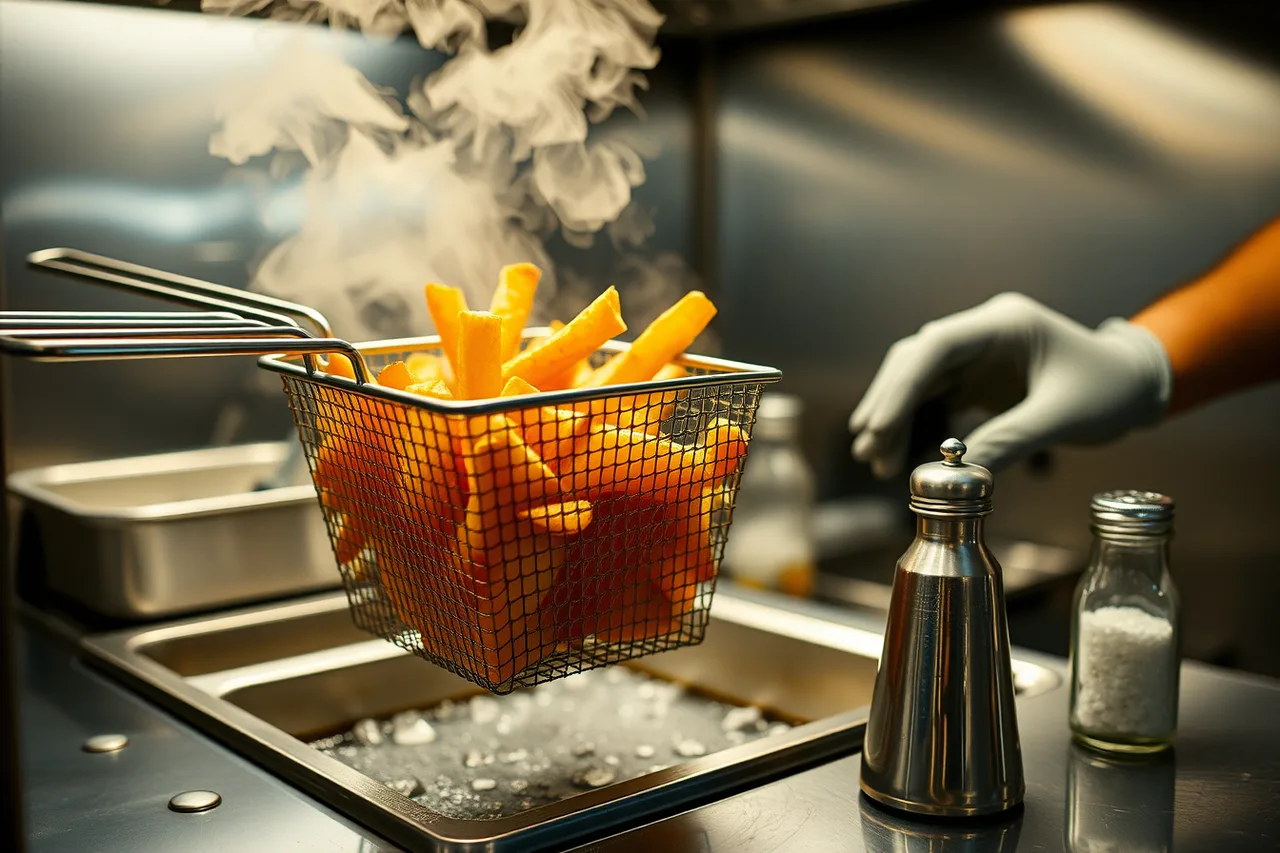
French fries. One fryer, one portion scoop, one salt station. The window time is short and the component list is short, which is why fries appear on almost every truck in the country. They also carry a high waste rate if you over-blanch, so weigh W against the speed.
Smash burgers. Thin patties cook in under two minutes on a flat top, and the same surface handles onions, cheese and buns. They share components with breakfast sandwiches if you use the same griddle and the same cheese, which lifts N and cuts your delivery lines.
Breakfast sandwiches. Egg, cheese, meat, bun. The build is identical every time, so training is short and T is stable. They suit a commuter pitch with a sharp morning peak, and they share the griddle with burgers for the rest of the day.
Hot dogs and sausages. The lowest T on most boards. A roller or a steamer holds par without a cook watching it, and the toppings bar is a customer-side step rather than a line-side one. Weak on perceived value, strong on throughput.
Tacos. Fast to assemble if the proteins are prepped and held hot, slow if they are cooked to order. Corn tortillas, onion, cilantro and one salsa carry most of the board, so N is high and the cold volume is small.
Coffee and tea. Nearly zero T at a self-serve or pour station, and the highest contribution per second of anything you will sell. The catch is equipment: a commercial brewer draws power you may not have at every pitch.
Bottled and canned drinks. Buy, chill, hand over. T is close to zero. V is the problem, because a case of cans takes cold space a portion of protein could use. Run the volume correction before you double your par.
Frozen treats. Popsicles, ice cream bars, soft serve where you have the power. They suit summer festival pitches and Atlantic Canada's short season, and they need almost no line attention. Winterising in the Prairies kills them for four months, so treat the revenue as seasonal.
Rank them with your own numbers
Per item, define P as the price you charge, C as the component cost from delivered prices, and T as the seconds of exclusive line attention the item consumes between order and handover.
V is the cold or dry space its par occupies. W is the share of that par that comes back unsold over comparable services. N is how many other items share its components.
Contribution is P minus C. Rate is that figure divided by T. Rank by Rate and the order usually changes: simple items rise, high-margin items that block the window fall.
| Correction | What it captures | How to apply it |
|---|---|---|
| Waste | Product bought and not sold | Reduce effective contribution by the share W represents |
| Volume | Cold space denied to something else | Compare Rate per unit of V, not Rate alone |
| Shared components | Risk and prep cost carried by one item alone | Treat a high N as a bonus and N of zero as a penalty |
At a pitch with a hard peak, Rate is close to the whole story. At a long soft curve, Contribution matters more, because time is not the binding constraint. The same board can be right at one pitch and wrong at another.
Measure T honestly
T is the variable people get wrong, always in the same direction. Timed on a quiet afternoon by the person who invented the dish, every item is fast.
Measure during a real peak, with a stopwatch, on someone who is not the owner. Count from the moment the item starts consuming exclusive attention to the moment it is handed over. Include the fetch, the assembly and the pack.
Do this once a season and after any equipment change. A new appliance or a new layout moves T for several items at once. The board that results has to be one the line can actually run, which is the constraint set out in how a menu is designed backwards from the line.
Keep the record that makes this possible
Sales by item, waste by item, delivered costs filed as they arrive. The IRS says a business must keep a system that clearly shows income and expenses and retains the documents supporting purchases and other transactions.
Who records what, and when, is a role question. It belongs with how the truck is staffed and what each person owns, because a measurement nobody is responsible for does not happen.
Two things this list cannot tell you
It cannot tell you what is legal to make on board. What a mobile unit may cook, cool, hold and assemble is set by your health authority, and an item that scores well but needs a step you are not permitted to perform is not a candidate.
Confirm the process with your inspector and record the answers alongside the rest of the compliance picture.
The FDA maintains a state-by-state directory of the agencies that administer retail food regulation if you are unsure who that is.
It cannot tell you what you may claim about an item either. Board descriptions are advertising, and the Federal Trade Commission's guidance for small business advertisers is clear that claims must be truthful and capable of being supported. Repeating a supplier's description does not transfer that responsibility.
How that description reaches customers is part of how a moving business tells people what it sells. Whether an item travels to a new pitch or county is among the questions in the growth decisions.
Common questions
Are drinks always the best margin?
They usually score well on Rate because T is close to zero, and badly on V because they occupy cold space out of proportion to their contribution. Run both corrections rather than assuming. The answer depends on your cold capacity and your pitch.
Should I price the slow items higher instead of cutting them?
Sometimes, and it is worth testing. Raising P raises Rate directly, and an item people will wait for at a higher price can be worth its seconds. What does not work is keeping a slow, cheap item because it has always been there.
How often should I rerun this?
Once a season, plus after any change to equipment, layout, pitch or supplier pricing. Each of those moves at least one variable, and a ranking based on last year's T describes a truck you no longer operate.
What if two items score the same?
Keep the one with the higher N. Shared components mean less inventory risk, fewer delivery lines and less prep, and that advantage compounds every service while a small difference in contribution does not.