Guides
What a food truck business keeps in stock, and who supplies it
What a food truck carries, how much of it, and the named suppliers that stock it, from broadline distributors to cash-and-carry and restaurant wholesalers.
What to take away
- Stock splits into four groupsfood, disposables and packaging, cleaning and chemicals, and propane or fuel.
- Broadline distributors, cash-and-carry warehouses, restaurant wholesalers and specialty suppliers each cover a different part of that list.
- Load per service, never per week. You cannot restock at 11:40 on a lunch pitch.
- Required load = (E x A x Q x S) - L, and two ceilings override it: cold volume and shelf life.
- Set S, the safety multiplier, from your own run-out and return log, not from how you feel at 6am.
What a truck actually carries
Four groups cover almost every truck, whatever the menu.
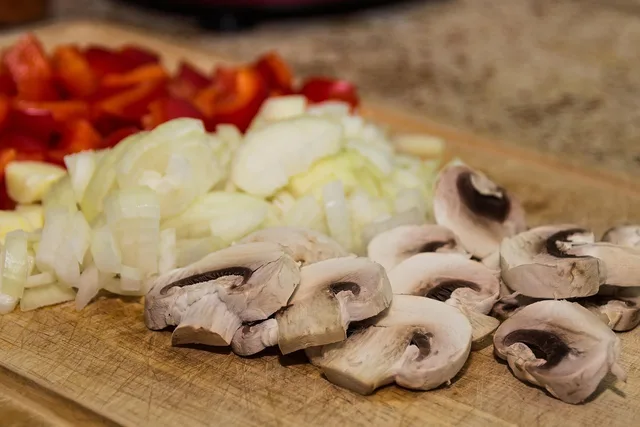
Food: proteins, produce, dairy, dry goods, sauces and frozen items. Disposables:
- clamshells
- cups
- lids
- cutlery
- napkins
- bags
- wraps
Cleaning and chemicals:
- sanitiser
- degreaser
- gloves
- hand soap
- paper towel
- test strips Fuel and gaspropane cylinders, and diesel or petrol for a generator or the vehicle itself.
Each group has a different supplier, a different reorder rhythm and a different cold or dry space claim.
Who supplies it
Broadline distributors. Sysco, US Foods and Performance Food Group carry food, disposables and chemicals on one invoice, delivered to a commissary. Pricing runs on a negotiated cost-plus agreement, so the percentage matters more than any single item price. Suits an operator running a fixed weekly order across a wide menu.
Supplier types and what they suit
Broadline
- Examples
- Sysco, US Foods
- Pricing
- Cost-plus
- Delivery
- To commissary
- Suits
- Fixed weekly order
Cash-and-carry
- Examples
- Restaurant Depot
- Pricing
- Per unit
- Delivery
- None
- Suits
- New or small menu
Specialty
- Examples
- Local butcher
- Pricing
- Category premium
- Delivery
- Varies
- Suits
- Signature items
Cash-and-carry warehouses. Restaurant Depot, Jetro and Costco Business Center sell to walk-in buyers with a membership or business licence. No delivery, no contract, pricing per unit at the till. Suits a new truck, a small menu, or a top-up between deliveries.
Specialty food wholesalers. A local produce house, a butcher, a bakery and a dairy each sell one category better and fresher than a broadliner. Suits a menu built on one or two signature items where quality is the pitch.
Packaging specialists. WebstaurantStore, Uline and Imperial Dade sell clamshells, cups, lids and wraps by the case, often cheaper than a broadliner on volume lines. Suits any truck with a fixed packaging format.
Propane and fuel. A national cylinder exchange such as AmeriGas or Blue Rhino, or a local refill depot. Suits every truck that cooks with gas.
Specialty and ethnic suppliers. A tortilleria, an Asian grocery wholesaler or a halal meat supplier covers a menu a broadliner cannot. Suits trucks whose food is the differentiator.
The variables
Define these once, per item, per service type.
E is expected covers: how many customers you expect at this pitch, in these hours, on this day.
A is the attach rate for the item: the share of those customers who order it, taken from your sales history.
Q is the quantity consumed per order, in the unit you buy in.
S is the safety multiplier, a number just above one covering a better than expected day.
L is what is already loaded and still usable from the previous service.
The base formula
Required load for an item is:
The load formula
- Eexpected covers
- Aattach rate
- Qquantity per order
- Ssafety multiplier
Load = (E x A x Q x S) - L
The work is not in the arithmetic. It is in getting E and A from records rather than memory, and being honest about S.
Run it per component, not per dish, because most components are shared. A component used by three menu items has an attach rate that is the sum of the three. Item-by-item thinking is what empties a truck of the one thing everything depends on while it carries too much of everything else.
The two ceilings
The formula gives a number. Two constraints can override it.
The first is volume at temperature. Cold truck space is small and shared by raw, prepped and ready items. Measure the space a par really takes, not whether the case fits.
When total loads exceed that space, cut the item with the worst ratio of sales to cold volume.
The second is shelf life. Anything that comes back has to be usable next time, or the load was never a load. It was a purchase of waste.
The model food code your health authority adapts sets out the concepts your inspector will use for holding, cooling and reheating returned product. The specific figures come from the health department that governs you. If you are unsure which body that is, the FDA publishes a state-by-state directory of retail food agencies.
Setting S from evidence
The safety multiplier is where most operations lose money, in both directions.
Log two things per item across a run of comparable services: how much came back unsold, and every run-out with a rough estimate of lost sales. Then read the pair together.
| What the log shows | What it means | What to do with S |
|---|---|---|
| Regular returns, never runs out | S is too high for this item | Lower it and watch for a fortnight |
| Regular run-outs, no returns | S is too low, or E is wrong | Check E first, then raise S |
| Both returns and run-outs | Demand is variable, not mis-set | Look at whether the pitch has two crowds |
| Neither, consistently | The par is right | Leave it alone |
The third row is the interesting one. Both happening at the same pitch usually means you are averaging two different services, a wet day and a dry one, or a payday week and the one after. Split them and calculate separately.
Getting E right
E is the variable people fill in from optimism. Derive it from the sales record for that exact pitch, day and time band, not for the week.
With no history, count instead of guessing. Stand at the pitch during your trading hours more than once. Record footfall, how many people stop at what is already there, and how long anyone waits before leaving.
Write your expectation down before the first service so the result teaches you something. The method for that is in the elimination order for choosing a pitch, and the counting discipline it describes is the input to E.
Weather deserves its own treatment rather than a fudge in S. Keep it in the log and you will see which pitches have a wet-day version of E that is a different number, not a smaller one.
What the formula cannot do
It cannot tell you whether an item should exist. That turns on whether the item earns its cold volume, its prep step and its second of decision at the window better than the item that would replace it.
A wider board slows the queue, and on a truck throughput is the revenue model, so range is expensive in a way the load formula never shows. Those tradeoffs sit in how par, range and cold chain fit together.
It also cannot handle components shared with a catering booking or a second pitch on the same day. Where one load serves two services, calculate both and add them before checking the volume ceiling, rather than calculating the bigger one and hoping.
Keeping the record that makes this work
None of this works without a daily habit: log the load out, log what came back, log every run-out, reconcile against sales the same day.
That record is also a business record. The IRS directs that a business keeps a system that clearly shows income and expenses with documents supporting purchases and other transactions. Daily logging is less work than reconstructing it, and it is the only source of honest values for E and A.
Attach rates and run-out data drive what stays on the board, which shapes what you tell customers to expect before they arrive.
Storage and transport conditions are inspected, so they belong in the compliance register and its cycle. Who prepares, loads and counts is a role question covered in how a truck is staffed and trained.
Common questions
Should I aim to sell out every service?
Selling out is a signal, not a goal. It tells you E or S was too low, and it costs you the orders that walked away, which is usually more than the waste you avoided. Aim to end with a small, deliberate remainder of items that keep, and none of the items that do not.
What if I have no sales history at all?
Then E is a written guess with a date on it, not a number. Load conservatively, record everything, and expect to revise after three or four services. The first month at a new pitch is a measurement exercise; treating it as a normal trading month is how new operators buy a freezer full of regret.
Does this work for a catering booking?
Better than it works for a pitch, because E is known in advance. Ask for a confirmed headcount, ask when it can still change, and put the change deadline in the agreement. The uncertainty moves from demand to the client's guest list, which is a negotiable thing rather than a weather-dependent one.
How often should I recalculate?
Whenever a variable moves. A change of pitch, a change of hours, a menu change, a seasonal shift, or a run of services where the log shows a pattern. Beyond that, a scheduled review each season stops a par drifting quietly out of date while nobody notices.